LangGraph (from the LangChain team) is probably the most capable way to hand-build agent state machines in Python or TypeScript: explicit graphs, checkpoints, streaming, full control of every token. It's a framework — you write, test, deploy and operate the code.
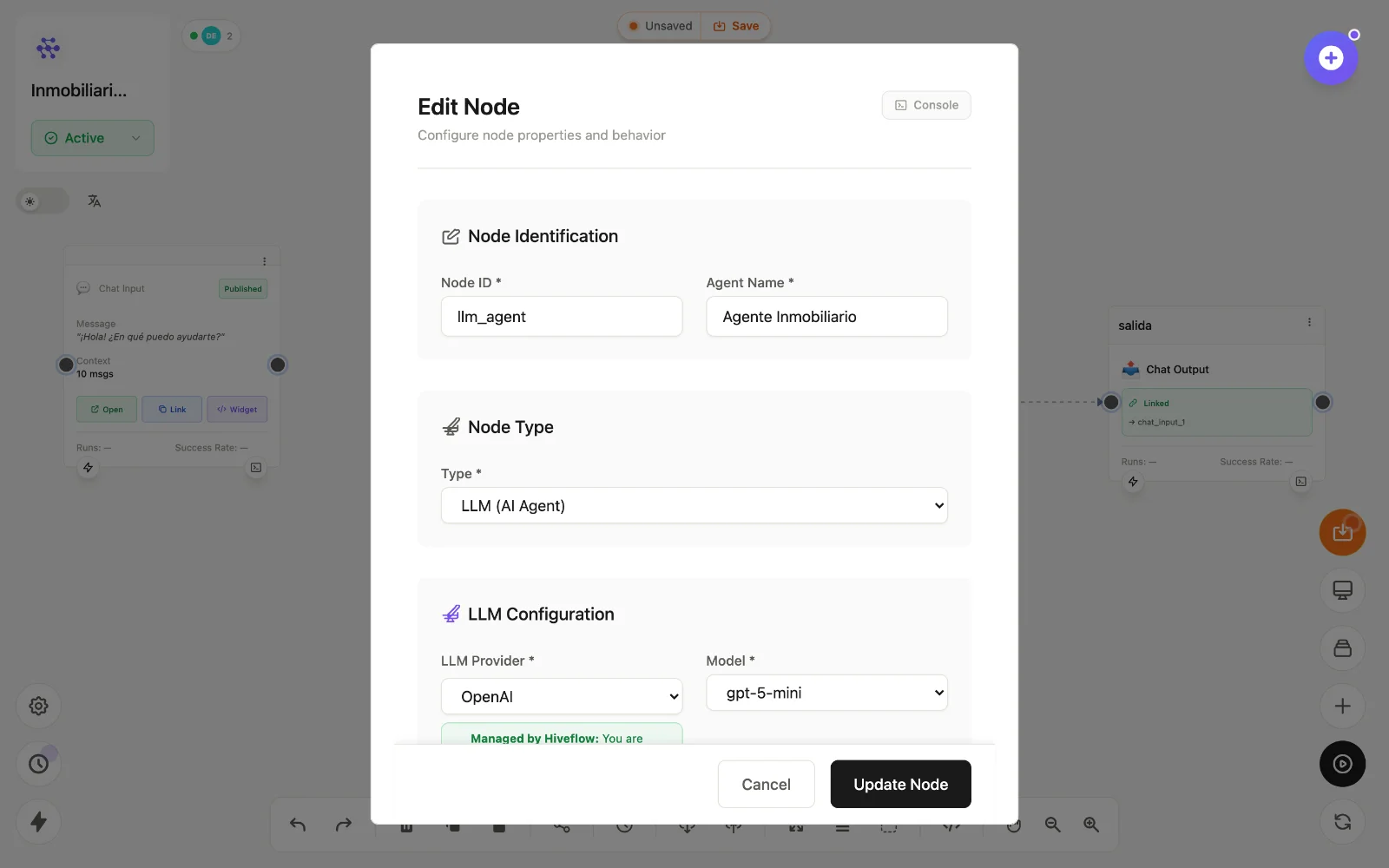
HiveFlow is a platform: the graph is drawn on a canvas, agents are configured nodes, tools arrive via MCP or built-in apps, and running/monitoring/publishing are built in.
Side by side
| LangGraph | HiveFlow | |
|---|---|---|
| Audience | Engineers | Builders, ops teams, engineers who want speed |
| Definition | Code (Python/TS) | Visual canvas (+ Genius prompts) |
| State control | Total (checkpointers, reducers) | Managed (sessions, memory nodes, variables) |
| Custom logic | Unlimited | Code node + HTTP escape hatches |
| Deployment | Your infra / LangGraph Platform | Built-in (chats, WhatsApp, forms, apps, API) |
| Observability | LangSmith (separate) | Per-node consoles, FC traces, analytics |
| End-user UI | You build it | Included (apps, widgets, agent chats) |
| Cost model | Your infra + LLM keys | Credits (managed keys) or BYOK |
Choose LangGraph when…
Your agents need custom state machines, exotic control flow or deep integration in an existing codebase — and you have engineers to own that code in production.
Choose HiveFlow when…
You want the agent live this week, operated by people who aren't all engineers, with the interface (chat/WhatsApp/app) and the observability already there. Most business agents — support, sales, ops — fit this shape.
Mixing them
A LangGraph service can call HiveFlow flows over HTTP or consume them as MCP tools — and vice versa: a HiveFlow agent can call your LangGraph service with an HTTP Request node. Structure where you need control, platform where you need speed.